Source Cooking Utensils for Home, Restaurant, and Outdoor Use
Find 30 verified listings for cooking utensils including silicone sets, wooden handles, and stainless steel options. Compare specifications, certifications, and customization features for home kitchens, restaurants, and outdoor cooking needs.
Key considerations
Products List




Comprehensive Sourcing Guide
Strategic Sourcing Guide for Cooking Utensils
Understanding Product Categories and Material Composition
When initiating a procurement strategy for cooking utensils, buyers must first distinguish between the diverse material compositions available in the global market. The supplied data indicates a primary focus on silicone-based kitchenware, often combined with wood or polypropylene (PP) handles. These products are frequently categorized as "Silicone Kitchenware" or "Cooking Sets," with specific models such as "Silicone Kitchenware-01" and "KW-02" representing distinct product lines. The core material composition is critical for determining heat resistance and durability. The observed data specifies that main materials include Wood, PP, and Silicone, which are selected for their ability to withstand high temperatures without degrading.
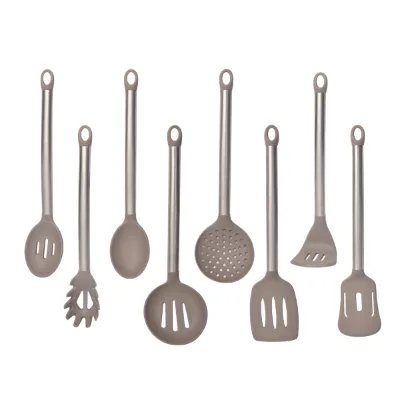
However, the market also includes aluminum circles and stainless steel variants, suggesting a broader scope for kitchenware sourcing. For instance, aluminum circles are described with specific grades like the 1000 Series and models including 1050, 1060, 1070, 1100, and 3003. These materials undergo processes such as hot rolling and cold rolling, with surface treatments ranging from mill finish to various temper states (O, H12, H14). While the primary keyword focuses on utensils, understanding that the supply chain often encompasses the raw materials for cookware is essential. Buyers should verify whether the supplier provides finished utensils or raw components, as the production processes for aluminum circles differ significantly from the molding and assembly of silicone sets. The product components listed include spatulas, turners, tongs, whisks, ladles, brushes, and spoons, forming comprehensive sets that can be customized in sizes of 6, 12, or 24 pieces.
Technical Specifications and Performance Parameters
Technical due diligence requires a rigorous examination of the physical and thermal properties of the utensils. The supplied facts highlight a specific temperature resistance range of -40°C to 230°C, with some data points noting a maximum heat resistance of 250°C. This variance necessitates clear verification with the supplier to ensure the product meets the specific thermal demands of the intended application, whether for home kitchens, restaurants, or outdoor BBQ scenarios. The silicone hardness is another critical specification, observed to range from 30 to 70 Shore A, with customization available. This hardness level directly impacts the utensil's flexibility and its ability to clean non-stick surfaces without causing damage.
Dimensions are equally vital for functional compatibility. Handle lengths are observed to be available in 15cm, 25cm, and 30cm increments, with customization options extending to 20-35 cm based on product requirements. The standard product sizes also include lengths of 30cm, 35cm, and 40cm. Buyers must ensure that the selected handle length aligns with the depth of the cookware they intend to use, particularly for woks and deep pots. Furthermore, the product attributes indicate a lightweight design, which enhances user comfort during prolonged cooking sessions. The sets are designed for multifunctional use, including stirring, flipping, and baking, requiring a balance of rigidity and flexibility that is achieved through the specific silicone formulation and handle construction.
Compliance, Certification, and Safety Standards
In the food contact industry, compliance is not merely a regulatory hurdle but a fundamental requirement for market access and consumer trust. The supplied data lists several key certifications, including FDA, LFGB, CE/EU, CIQ, and EEC. These certifications validate that the materials used, particularly the silicone and plastics, are non-toxic and safe for food contact. The products are explicitly described as BPA-free and non-toxic, which is a standard expectation for modern kitchenware but must be verified through current documentation. The presence of an antibacterial coating and odor-resistant design further enhances the safety profile, addressing hygiene concerns in commercial and residential settings.
Buyers should note that while the data mentions these certifications, the specific validity and scope must be confirmed for each batch. For instance, the FDA and LFGB certifications are distinct regulatory frameworks; FDA applies to the United States, while LFGB is the German standard for food safety. The presence of CE/EU indicates compliance with European safety, health, and environmental requirements. Additionally, the product origin is listed as China, with specific manufacturing hubs in Guangdong and Henan. Buyers should verify that the specific factory location aligns with the certification claims, as regulatory oversight can vary by region. The absence of specific test result data in the provided facts means that procurement teams must request third-party laboratory reports to confirm that the antibacterial properties and heat resistance claims meet the stated numerical ranges.
Cost Drivers and Pricing Dynamics
The pricing for cooking utensils is influenced by a complex interplay of material costs, customization levels, and order volume. The observed price range in the market spans from $0.25 to $3,800, a wide disparity that reflects the difference between single-item purchases and large-scale industrial orders or complete kitchen sets. The Minimum Order Quantity (MOQ) ranges from 1 to 3,000 units, indicating flexibility for both small retailers and large distributors. However, the cost per unit is likely to decrease significantly as the order volume increases, particularly for standardized models like the "Silicone Kitchenware-01."
Material composition is a primary cost driver. Sets utilizing premium silicone with wooden handles will generally command a higher price point compared to those with plastic or PP handles. Customization is a significant factor in pricing; the data confirms that customization is available for set contents, handle types, colors, and dimensions. Custom colors, such as black, white, red, and blue, or bespoke color requests, may incur additional tooling or setup fees. Packaging also affects the final cost, with options ranging from standard color box packaging to custom branding. Buyers should be aware that the "Standard Export Package" and "Brown Paper" covering for aluminum components represent different cost structures compared to the "Color Box Packaging" for finished utensils. Understanding these variables is essential for accurate budgeting and negotiating favorable terms with suppliers.
Supplier Evaluation and Operational Capabilities
Selecting a reliable supplier requires an assessment of their operational capabilities, particularly regarding customization and production consistency. The data indicates that the products originate from China, with specific mentions of Guangdong and Henan provinces. Guangdong is known for its advanced manufacturing ecosystem, particularly for silicone and plastic products, while Henan is a hub for aluminum processing. Buyers should evaluate whether the supplier has integrated capabilities for both material processing and final assembly, or if they act as a trading company sourcing from different factories.
The ability to customize is a key differentiator. The data shows that set contents can be tailored to 6, 12, or 24 pieces, and handle lengths can be adjusted. Suppliers who offer flexible production lines for these customizations are better positioned to meet diverse market needs. However, buyers must verify the lead times associated with these customizations, as the provided data does not specify standard lead times. It is crucial to inquire about the supplier's capacity to handle large orders, given the observed MOQ of up to 3,000 units. Additionally, the supplier's history with certifications like FDA and LFGB should be scrutinized. A supplier with a proven track record of maintaining these certifications across multiple batches is preferable to one that relies on a single certification for a specific product line.
Quality Control and Long-Term Procurement Considerations
Effective quality control (QC) is paramount to ensuring that the purchased utensils meet the specified performance criteria. Given the wide range of observed specifications, such as silicone hardness between 30-70 Shore A and temperature resistance up to 250°C, buyers must implement a robust QC protocol. This should include pre-shipment inspections that verify physical dimensions, material integrity, and color consistency. The "Easy to Clean" attribute, which includes dishwasher safety, must be validated through actual testing to ensure the utensils do not degrade or discolor after repeated exposure to high heat and detergents.
Long-term procurement considerations involve establishing a sustainable supply chain that can adapt to market changes. The availability of custom packaging and colors suggests that suppliers can support brand differentiation, which is vital for long-term growth. Buyers should also consider the environmental impact, as the "Eco-Friendly" style attribute indicates a market trend towards sustainable materials. Ensuring that the supplier adheres to environmental standards and uses non-toxic materials will future-proof the procurement strategy. Furthermore, the "Non-Disposable" nature of the products implies a focus on durability, which reduces waste and aligns with sustainability goals. Buyers should negotiate terms that include quality guarantees and clear protocols for handling defective batches, ensuring that the long-term relationship remains productive and reliable.
Application Scenarios and Market Fit
The versatility of cooking utensils allows them to serve a wide array of application scenarios, from domestic use to commercial operations. The data highlights applications in home kitchens, restaurants, outdoor picnics, and BBQ events. This broad applicability means that a single product line can target multiple market segments. For home users, the focus is often on aesthetics, ease of cleaning, and safety, with a preference for non-slip handles and comfortable grips. In commercial settings like restaurants, durability and heat resistance become the primary concerns, necessitating utensils that can withstand frequent use and high-temperature cooking environments.
The specific product components, such as spatulas, whisks, and ladles, are designed to be multifunctional, suitable for stirring, flipping, and baking. This versatility makes them ideal for a variety of cooking methods, including the use of non-stick pans, baking trays, and woks. The "Antibacterial Design" and "Odor-Resistant Design" are particularly relevant for commercial kitchens where hygiene is strictly regulated. Buyers should align their product selection with the specific needs of their target customers. For example, a supplier targeting outdoor enthusiasts might prioritize lightweight designs and durable materials that can withstand the rigors of camping, while a supplier focusing on high-end restaurants might emphasize premium materials and elegant finishes. Understanding these nuances ensures that the procurement strategy effectively meets the demands of the end-user market.
FAQs
What certifications do the cooking utensils hold?
The products hold FDA, LFGB, CE/EU, CIQ, and EEC certifications. These validate safety for food contact and compliance with international standards for materials like silicone and plastic.
Can I customize the handle length and set contents?
Customization is available for handle lengths ranging from 15cm to 35cm and set contents of 6, 12, or 24 pieces. Buyers can request specific dimensions and component combinations to match their needs.
What is the temperature resistance of the silicone utensils?
The utensils resist temperatures from -40°C to 230°C, with some models rated up to 250°C. This range ensures durability for cooking, baking, and food preparation in various kitchen environments.
Are these cooking utensils safe for non-stick pans?
Yes, the silicone and plastic materials are suitable for non-stick pans, baking trays, and woks. Their soft texture prevents scratching while maintaining effective stirring, flipping, and baking capabilities.
What materials are used to make these kitchenware sets?
The main materials include wood, polypropylene, and silicone. These components are selected for their heat resistance, lightweight design, and ability to provide a comfortable, non-slip grip during use.
How are the products packaged for export?
Packaging options include color boxes, custom packaging, and standard export packages with brown paper covering. Buyers can choose between standard or branded packaging depending on their distribution requirements.
What is the minimum order quantity for these items?
The minimum order quantity ranges from 1 to 3000 units depending on the specific product and customization level. This flexibility supports both small retailers and large distributors in sourcing kitchenware.